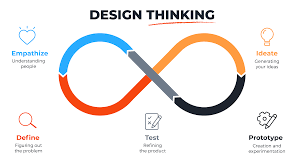
Design Thinking
Why Design Thinking?
Design thinking is a powerful process of problem solving that begins with understanding unmet customer needs. From that insight emerges a process for innovation that encompasses concept development, applied creativity, prototyping, and experimentation. When design thinking approaches are applied to business, the success rate for innovation improves substantially.
Who should attend?
This program is for teams and individuals who want to learn a proven, systematic approach to new product development. Anyone responsible for driving innovation, growth, and the customer experience should attend, including functional and cross-functional teams.
Roles of past participants include those from creative, design, customer experience, engineering, innovation, product, R&D, strategy, and UX, such as:
- Product Manager, Marketing Manager, Growth Manager, R&D Manager, and Product Head
- Senior Designer, UX Designer, Design Engineer, Creative Manager, UX Design Consultant, Art Director
- C-Suite executives including CEO, COO, Managing Director, Founder, President, Chief Strategy Officer
- Innovation and Growth Consultants
Course Outline:
Module 1: Design Thinking Skills:
Understand the critical design thinking skills needed to either improve an existing product or design a new product.
Module 2: Identifying Customer Needs:
Learn to identify customer needs and draft customer needs statements as your first step towards user innovations.
Module 3: Product Specifications:
Learn how to translate user needs into product specifications quantitatively, and how establishing product metrics can help to define those specifications.
Module 4: Applied Creativity:
Learn to apply creativity, brainstorming, and concept generation process in designing needs solutions.
Module 5: Prototyping:
Explore prototyping methods, strategies, and real-life examples where these have been applied to create a design that represents customer needs and product specifications.
Module 6: Design for Services:
Understand design of services, identify the potential for innovations within them, and learn how to apply product development frameworks to the service context.
Module 7: Product Architecture:
Learn to use the modular and integral product architectures in determining the building blocks of a product.
Module 8: Financial Analysis:
Learn to perform financial analysis of your project idea and decide if it is backed by a strong business rationale (Worth-It).
Module 9: Design for Environment:
Learn how to apply design for environment principles to a product life cycle.
Module 10: Product Development Processes:
Learn to select and implement a product development process (staged, spiral, and agile)that's aligned to your project needs.
WORKSHOP STYLE:
This will be a participative workshop with a mix of interactive learning sessions, exercises and discussions aimed to provide maximum impact and learning retention for all delegates.